
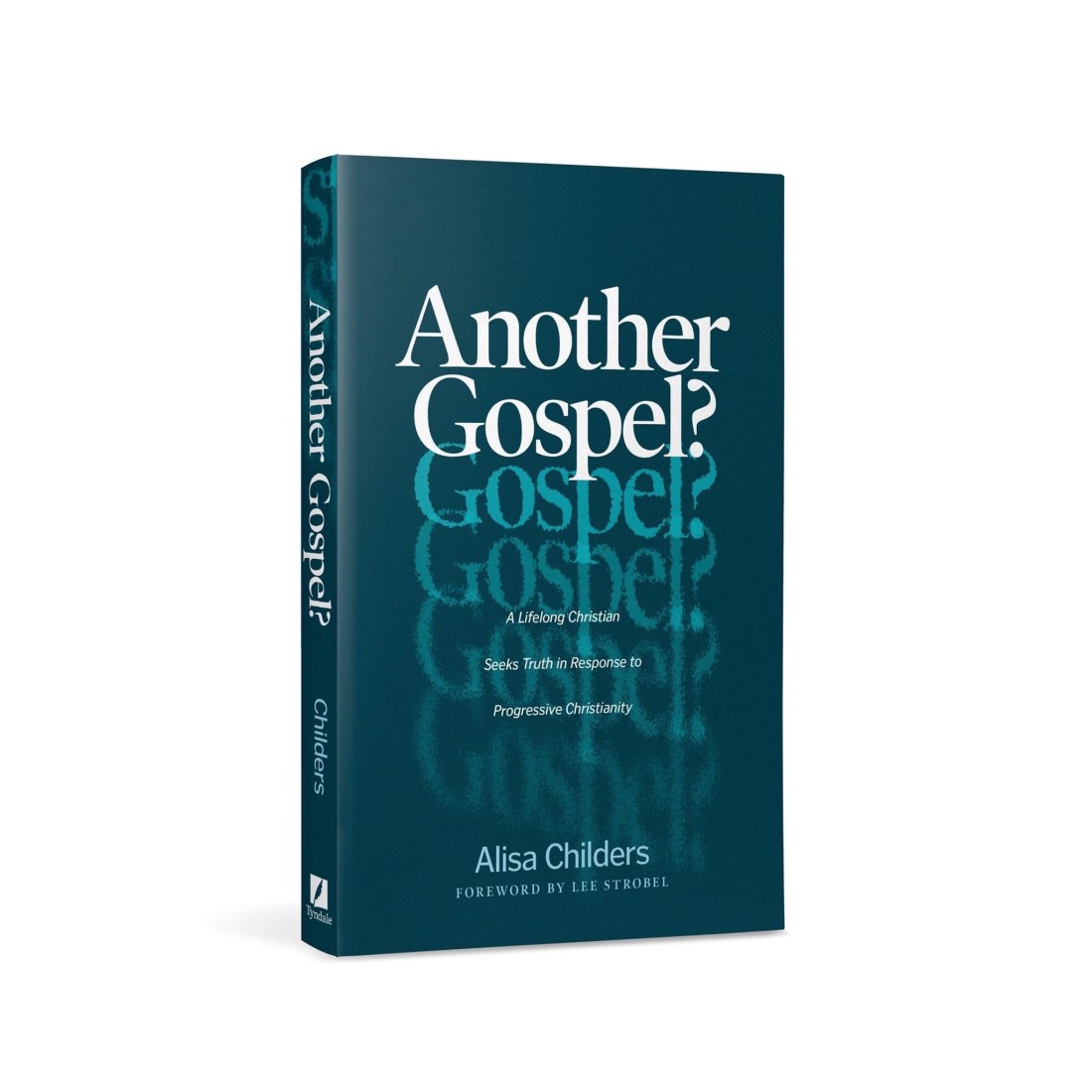
Another Gospel? by Alisa Childers provides an honest look at the author’s journey through a profound period of doubt that ultimately led to the rebuilding of her faith. Her tone is gracious and thoughtful throughout the book as she provides her readers glimpses into deeply personal and often painful moments in the process. Through her compelling narrative, Childers reveals how she dug deep down into the roots of historic Christianity in order to unearth an authentic portrait of the Christian faith. She shows with incredible vulnerability how she painstakingly picked apart doctrines once held dear in order to arrive at the bedrock of truth. She writes in chapter one, “God either exists, or he doesn’t. The Bible is his Word, or it’s not. Jesus was raised from the dead, or he wasn’t. Christianity is true, or it isn’t. There is no ‘my truth’ when it comes to God.”
The author, a former CCM recording artist with the group ZOEgirl, is relatable as she admits to having a genuine, yet unchallenged, faith in her younger years. This ultimately left her susceptible to some very unorthodox claims by a pastor who described himself as a “hopeful agnostic.” The description of the struggles she faced shines a light on the critical need for apologetics training in the church today in preparing Christians to face challenges that are becoming more prevalent all the time. She provides insight into how the progressive Christian movement pushes back against foundational Christian doctrines like Biblical authority, reliability of the Gospel accounts, the reality of Hell, and the atonement.
Childers is equal parts authentic storyteller and meticulous researcher. She provides keen insight into the roots of the progressive Christian movement and details its impact on today’s evangelical church. She is careful to include quotes by key thought leaders in progressive Christianity (Brian McLaren, John Pavlovitz, Rob Bell, Richard Rohr, Rachel Held Evans, and others) and contrasts their views with historic Christianity by quoting the earliest church fathers (Irenaeus, Clement, Justin Martyr, Augustine, Athanasius, and others.) In doing so, she demonstrates that progressive Christianity really is a different gospel altogether from what Christians have historically believed since its inception.
This book is a helpful tool for anyone seeking to navigate the often confusing landscape of the church today. Alisa Childers demonstrates the way in which beliefs that are completely antithetical to historic Christian doctrine can easily slip into the church in the absence of attention to Biblical literacy and without a carefully examined and reasoned faith. It provides a valuable review of essential, historic doctrines of the faith, while also serving as a warning for churches and individuals treading dangerously close to embracing progressive Christian beliefs.
I wholeheartedly recommend Another Gospel? It is an uplifting and challenging read appropriate for several distinct groups of people. For those outside the Christian faith seeking to examine its tenets, it provides an overview of historic Christian doctrine and the evidence that undergirds it. For readers firmly committed to historic Christianity, it provides an affirmation of the faith they already hold dear. Honest doubters seeking answers will find that Alisa provides an empathetic response demonstrated through details of her personal journey which attests to the benefits of earnestly seeking truth. All three types of readers will grow to appreciate Alisa’s compassionate and reasoned responses to the challenges that she faced throughout her personal pilgrimage.
 Minds on Things Above