
Sitting in my first gross anatomy class (gross as in macroscopic and not gross as in “Eww, yuck!”) at the age of 40, I knew I had made a mistake. How could I possibly remember all the information my professor expected me to retain in this foundational course for my Master of Science in Occupational Therapy? I faced the daunting task of memorizing the names, locations, and functions of hundreds of bodily structures and how they work together to allow people to do the things they need and want to do each day. While it was a difficult endeavor, my muddled thoughts soon turned to wonder as I discovered God’s awe-inspiring design for enabling the intricate parts of the human body to cooperate in precise and amazing ways. Of course, since the entry of sin, death, and disease into the world, parts don’t always function as they should. So, through the course of my studies, I also learned how people adapt, compensate, and work to restore lost abilities. Neurophysiology, probably my favorite class, taught me that something needs to direct all the other parts and that when communication is disrupted, chaos ensues. Digging into Scripture yields spiritual application from my late-night anatomy study sessions.
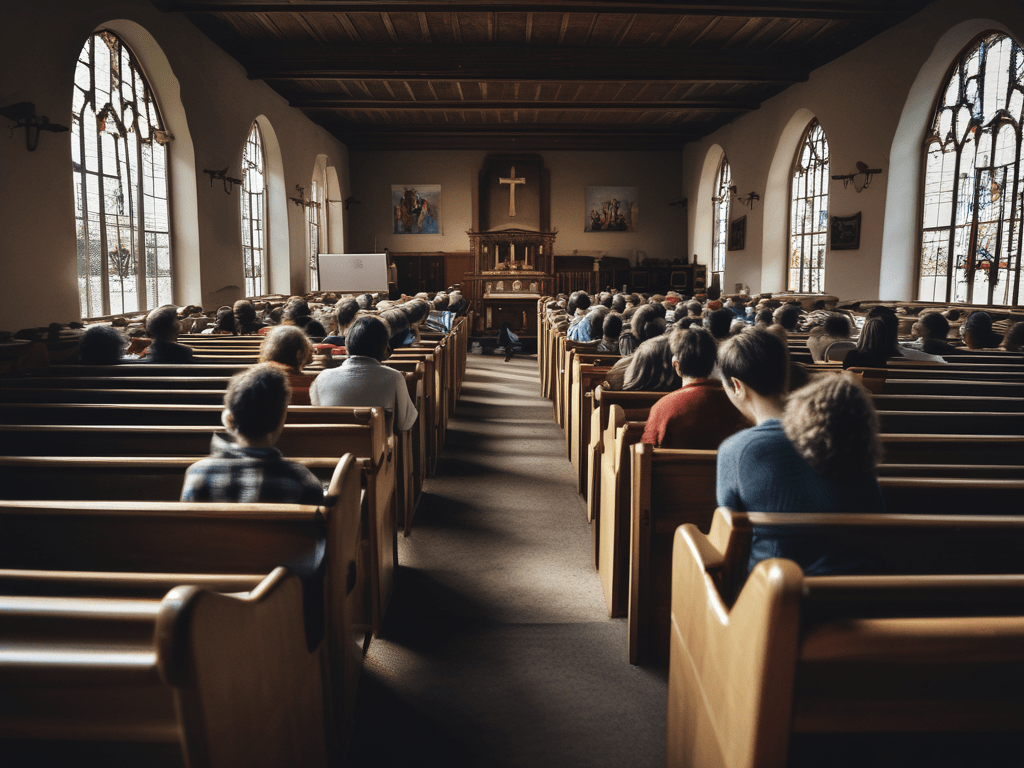
God was equally intentional in how He designed His spiritual body on earth, the church. The work of the body of Christ is fueled by the Holy Spirit as He produces the fruit of humility, gentleness, patience, and forbearance required for faithful service (Ephesians 4:2-3). Ephesians 4:7 reveals that He not only produces fruit but also provides purpose and direction for each individual part of the body: “Now grace was given to each one of us according to the measure of Christ’s gift.” Ephesians 4:16 describes how parts are arranged for different functions: “From him the whole body, fitted and knit together by every supporting ligament, promotes the growth of the body for building itself up in love by the proper working of each individual part.” The Apostle Paul elaborates further as he writes to churches in Galatia, Rome, and Colossae, teaching that diligent, specific, and thankful service as individuals collectively benefits all. While we each have a job, it’s really not all about us. It’s about following Christ who is the head directing the body.
Serve diligently. Paul says in Galatians 6:9-10, “Let us not get tired of doing good, for we will reap at the proper time if we don’t give up. Therefore, as we have opportunity, let us work for the good of all, especially for those who belong to the household of faith.” As we work for the good of all, how do we prepare ourselves for diligent spiritual service? I’ll suggest three starting points that correspond to our physical bodies: acknowledge fatigue, crave spiritual nourishment, and hydrate with Living Water.
Physical fatigue occurs when a body works hard and neglects adequate rest. Our all-wise God provides and commands sabbath rest because He anticipates our needs. He knows that we frequently fail to recognize our limits for fear of appearing weak. Accolades often come to those who work extra hours, push past the point of exhaustion, or burn the candle at both ends to accomplish goals and receive applause. Spiritual fatigue frequently coincides with physical fatigue; however, careful obedience to God’s command for sabbath rest helps us resist the temptation to showcase our own abilities and instead acknowledges our dependence on Him. He energizes us to work alongside our spiritual siblings for our good and His glory.
Our physical bodies also wear out when they don’t receive proper nutrients and the right kind of calories to fuel their work. Paul admonished believers in Hebrews 5:13-14 to feed on solid food rather than milk: “Now everyone who lives on milk is inexperienced about the message of righteousness, because he is an infant. But solid food is for the mature—for those whose senses have been trained to distinguish between good and evil.” Increased responsibility and heftier workloads require higher quality nourishment. Milk works temporarily but will not sustain forever. As we serve the body, our souls become depleted and need consistent high-quality nourishment from the meat of God’s Word. This spiritually dense food helps us discern increasingly convoluted messages propagated by a culture that becomes more hostile every day to the truth claims of Christianity.
Water comprises around sixty percent of the human body. No adequate substitute exists for this essential component. Dehydration and weariness set in when we fail to replenish our H2O, and in fact, true medical emergencies occur if we neglect to drink enough water while exercising, laboring, or even sitting outside on a hot summer day. Just as the physical body needs water for rehydration, the spiritual body needs the Living Water found in Jesus alone. In John 4, Jesus unexpectedly speaks to a Samaritan woman as she draws water at a well in the middle of the day. Their discussion about physical water pivots to His offer of Living Water. Jesus says, “Everyone who drinks from this water will get thirsty again. But whoever drinks from the water that I give him will never get thirsty again. In fact, the water that I will give him will become a well of water springing up in him for eternal life.” (John 4:13-14) As believers, we have the same well of Living Water available today. We can only effectively work within the body of Christ as we quench our thirst with long and deep drinks from this well while serving as conduits for those around us who desperately need the Living Water Jesus offers.
Serve specifically. The average adult human body amazingly contains from twenty-eight to thirty-six trillion cells. That’s twelve zeroes! These cells are classified into approximately two hundred different types which then miraculously organize themselves into tissues, organs, and systems functioning together as one unique body. What a beautiful picture of the specific role each believer plays in the body of Christ! No one member has the same job. Not only that, but God designed us to mutually depend on each other as we carry out our specific part of His mission on earth. This mutual dependence requires humility as emphasized by Paul in Romans 12:3-5 when he writes, “For by the grace given to me, I tell everyone among you not to think of himself more highly than he should think. Instead, think sensibly, as God has distributed a measure of faith to each one. Now as we have many parts in one body, and all the parts do not have the same function, in the same way we who are many are one body in Christ and individually members of one another.” Consider what happens when cells in the human body go rogue and pursue their own agendas rather than serve the body. These cells invade surrounding tissues and organs and prevent them from functioning properly. Sometimes they turn into benign growths that simply distract the other parts from their intended roles. Other times they become malignant, consume precious resources, and lead to life-threatening consequences. This is a good lesson for members of the body of Christ. We need to resist the cries of popular identity-driven ideologies that shout, “You do you!” and encourage us to cut off, cancel, or divide from parts of the body with whom we disagree. Rather, members of the body of Christ are instructed to humbly pursue the purposes for which God intended them, considering the needs of the whole without distracting from the mission or harming the body.
Serve thankfully. The heart, one of the body’s vital organs, pumps nutrient and oxygen-rich blood throughout over 60,000 miles of vessels in the human body. That’s more than twice the distance around the world! It’s impossible to maintain good physical health without a properly functioning heart. We find a parallel in the church when Paul writes Colossians 3:16-17, “Let the word of Christ dwell richly among you, in all wisdom teaching and admonishing one another through psalms, hymns, and spiritual songs, singing to God with gratitude in your hearts. And whatever you do, in word or in deed, do everything in the name of the Lord Jesus, giving thanks to God the Father through him.” Though not a Christian, the Roman philosopher Cicero is credited with saying, “Gratitude is not only the greatest of virtues, but the parent of all the others.” I believe both Scripture and this secular philosopher strike at the heart (pun intended) of what empowers us to be effective members of the body of Christ. Gratitude, circulating among individual believers, is the lifeblood of the church. As we obey the greatest commandment to love God and devote ourselves fully to Him, we can’t help but be grateful for who He is and what He has done for us. Out of our gratitude toward God flows the love, joy, peace, patience, kindness, goodness, faithfulness, gentleness, and self-control (Galatians 5:22-23) we need to fuel daily interaction with our fellow image bearers. This gratitude that circulates among and in us should permeate every area of our lives because for the Christian no division exists between secular and sacred. As Christ goes with us into every sphere of our lives, the inside-out beauty of the gospel will attract the world to the infinitely better solution the church offers to the problems in the world around us.
As fascinating as the human body is, the body of Christ is even more remarkable. God the Father, through the Holy Spirit, equips us to serve diligently, specifically, and thankfully alongside our spiritual siblings as we carry out His mission on earth and reflect the hope that only He provides. Maintaining a healthy spiritual body is more important now than ever before as we care for each other, reach out into the world, and share the gospel.
 Minds on Things Above